
Dragon Hatch by PG Soft: review, 96.83% RTP and a 15000× ceiling
Dragon Hatch reviewed: 5×5 cluster pays with tumbles, 96.83% default RTP, medium volatility and a 15000× ceiling — what that is worth in practice.
- RTP96.83%
- VolatilityMedium
- Grid5×5
- Max win15000×
 18+
18+ Pros
- Default RTP of 96.83% — among the highest in PG Soft's catalogue
- A 15000× ceiling is unusually high for a medium-volatility slot
- Cluster pays needs no paylines: you read the result at a glance
- Tumbles turn a spin into a chain rather than a single outcome
Cons
- PG Soft does not publish a minimum bet — you only see it at your casino
- Tumbles disguise the maths: it feels like a bigger win than it was
- Base play is quiet; the ceiling depends on long, rare sequences
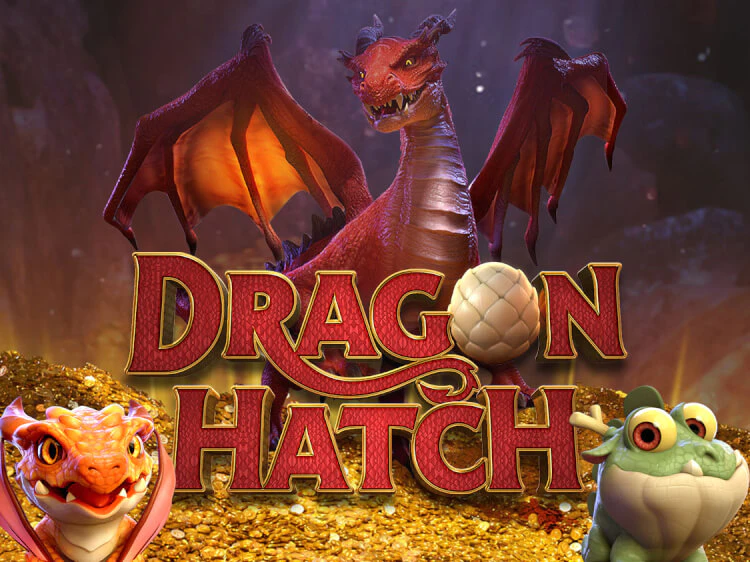
Dragon Hatch is one of those slots plenty of people play without knowing the name of the system in front of them. It has no paylines. On a 5×5 grid, symbols pay when a group of matching ones ends up connected to each other — horizontally or vertically, position irrelevant. Then they disappear, new symbols drop in, and the same spin can pay again. And again.
That chaining is what explains the game’s pull in Brazil, where Dragon Hatch turns up regularly alongside the “Fortune” series in PG Soft’s most-searched lists. On the release year, sources disagree — some say 2019, others 2020 — and it is not worth being categorical: this is a game from the studio’s first wave of cluster-pays titles.
Is Dragon Hatch worth playing?
Yes, for a concrete reason: the combination of numbers is rare. A default RTP of 96.83% — among the highest in PG Soft’s catalogue — medium volatility, and a ceiling of 15000× your bet. A ceiling that high normally comes bundled with high volatility and long dry stretches. Here it doesn’t.
The trade-off is real and worth stating plainly: at medium volatility, most of what Dragon Hatch returns is small, and plenty of it lands below your own stake. The 15000× is a mathematical cap per spin, not a session goal.
Verdict: of PG Soft’s cluster-pays slots, this is the one with the best balance of pace and potential. Good if you want constant movement and can accept that the big prize stays improbable.
Cluster pays: why there are no lines
On a payline slot, a symbol only counts if it lands on a specific position along a predefined path. Not here: what counts is adjacency. Matching symbols touching each other form a cluster, and the cluster pays.
The practical upside is legibility — no line maps to memorise, no working out why three identical symbols on screen paid nothing. The downside is that you lose the per-line cost reference: on a 30-line slot you know exactly what each line is worth; here the stake is a single block.
Tumbles: the spin that doesn’t end at the first result
When a cluster pays, the symbols involved leave the grid and the gaps are filled by new symbols falling from above. If the new arrangement forms another cluster, it pays again — and the cycle repeats until no combinations remain.
It’s the most compelling mechanic in the game and also the most misleading. A spin with four chained tumbles feels like a big win even when the combined total lands below your stake. Watch the balance, not the animation.
What “medium volatility” actually means here
It means you’ll see movement often: small clusters, short tumbles, partial refunds. It does not mean the game gives money back — it means it takes longer to take it. For a small bankroll that’s a genuine advantage, because the session lasts; for anyone hunting a quick spike, it’s a frustration.
Symbols and payouts
We’re not publishing a per-symbol paytable because we couldn’t verify one against a reliable source — and inventing multipliers would be worse than leaving them out. What PG Soft’s official record does confirm is the structure:
| Element | Confirmed | What it means in practice |
|---|---|---|
| Grid | 5×5 | Twenty-five positions; room for genuinely large clusters |
| System | Cluster pays with tumbles | No lines; connected symbols pay and are replaced |
| Volatility | Medium | Frequent movement, rare spikes |
| Max win | 15000× your bet | Per-spin cap; far above the norm at this volatility |
| Default RTP | 96.83% | Provider figure; see the note below |
| Minimum bet | Not published | PG Soft doesn’t disclose it; it varies by casino |
Once we have a paytable confirmed by a reliable source, we’ll publish it here with the real values.
Note: 96.83% is the default RTP set by PG Soft. Operators may run versions configured to a different RTP — that’s common industry practice and entirely legal. Always open the in-game info menu at the casino you’re playing at and check the number before betting. A game with the same name and the same artwork can carry a different RTP from one casino to the next.
Dragon Hatch vs the competition
| Slot | Provider | Default RTP | Volatility | Grid | Max win |
|---|---|---|---|---|---|
| Dragon Hatch | PG Soft | 96.83% | Medium | 5×5 | 15000× |
| Midas Fortune | PG Soft | 96.73% | Medium | 5×5 | 5000× |
| Wild Ape #3258 | PG Soft | 96.73% | High | 6×6 | 10000× |
| Pinata Wins | PG Soft | 96.75% | Medium | 5×3 | 5000× |
| Ganesha Fortune | PG Soft | 96.72% | Medium | 6 variable reels | 100000× |
| Treasures of Aztec | PG Soft | 96.71% | Medium | 6×5 | 100000× |
The reading is straightforward. Midas Fortune is the fairest comparison — same grid, same cluster system, effectively the same RTP — but it stops at 5000×, a third of Dragon Hatch’s ceiling. Wild Ape #3258 also uses tumbles and reaches 10000×, but swaps medium volatility for high: harder sessions. Pinata Wins puts tumbles on top of fixed lines and is a smaller game in every dimension.
If raw ceiling is what you’re after, Ganesha Fortune and Treasures of Aztec go to 100000× — but those are ways games on bigger grids with a different rhythm, not cluster pays. Within the “cluster plus tumbles” niche, Dragon Hatch is the best-balanced thing in the catalogue.
Bankroll tips
The risk here isn’t in the numbers — it’s in the reading. Chained tumbles produce noise, light and a sense of winning that rarely matches the actual figure.
- Set your limit before you open the game, in cash terms, not halfway through a session that’s going badly.
- Stake a small fraction of your balance per spin. PG Soft doesn’t publish a minimum bet; check the value at your casino and pick a level that buys you at least a few dozen spins.
- Check the balance after every long tumble. It’s the only antidote to the animation’s illusion.
- Don’t chase losses. Each spin is independent of the last — Dragon Hatch doesn’t “owe” you anything after twenty poor ones.
- Ring-fence your wins. If you double what you started with, withdraw half and keep playing on the rest.
- Set a clock, not just a number. On a tumbling slot, time moves faster than it feels.
The house holds a mathematical edge at any RTP. Play for the entertainment, with money you can afford to lose.
Where to play for real money



Responsible gambling
Slots are games of chance and high volatility can drain a balance fast. Set deposit limits and never gamble money you can’t afford to lose. If it stops being fun, get help.
18+ BeGambleAware: 0808 8020 133 (UK). 18+ only.
Frequently asked questions
What is the RTP of Dragon Hatch?
The provider's default RTP is 96.83%. Casinos can run versions configured to a different RTP, so always check the figure inside the game itself before you bet.
How do cluster pays work in Dragon Hatch?
There are no paylines. On a 5×5 grid, symbols pay when enough matching ones are connected to each other — position does not matter, contact does. Winning symbols then vanish and new ones drop in, which can chain several wins inside a single spin.
What is the maximum win on Dragon Hatch?
The confirmed maximum is 15000× your bet. That is the theoretical per-spin cap, not a target: reaching it takes a long chain of tumbles, which is rare by design.
What year is Dragon Hatch from?
Sources disagree — some listings say 2019, others 2020. The official PG Soft record we use says 2020, but it is not worth being firm about it; the game plays the same either way.